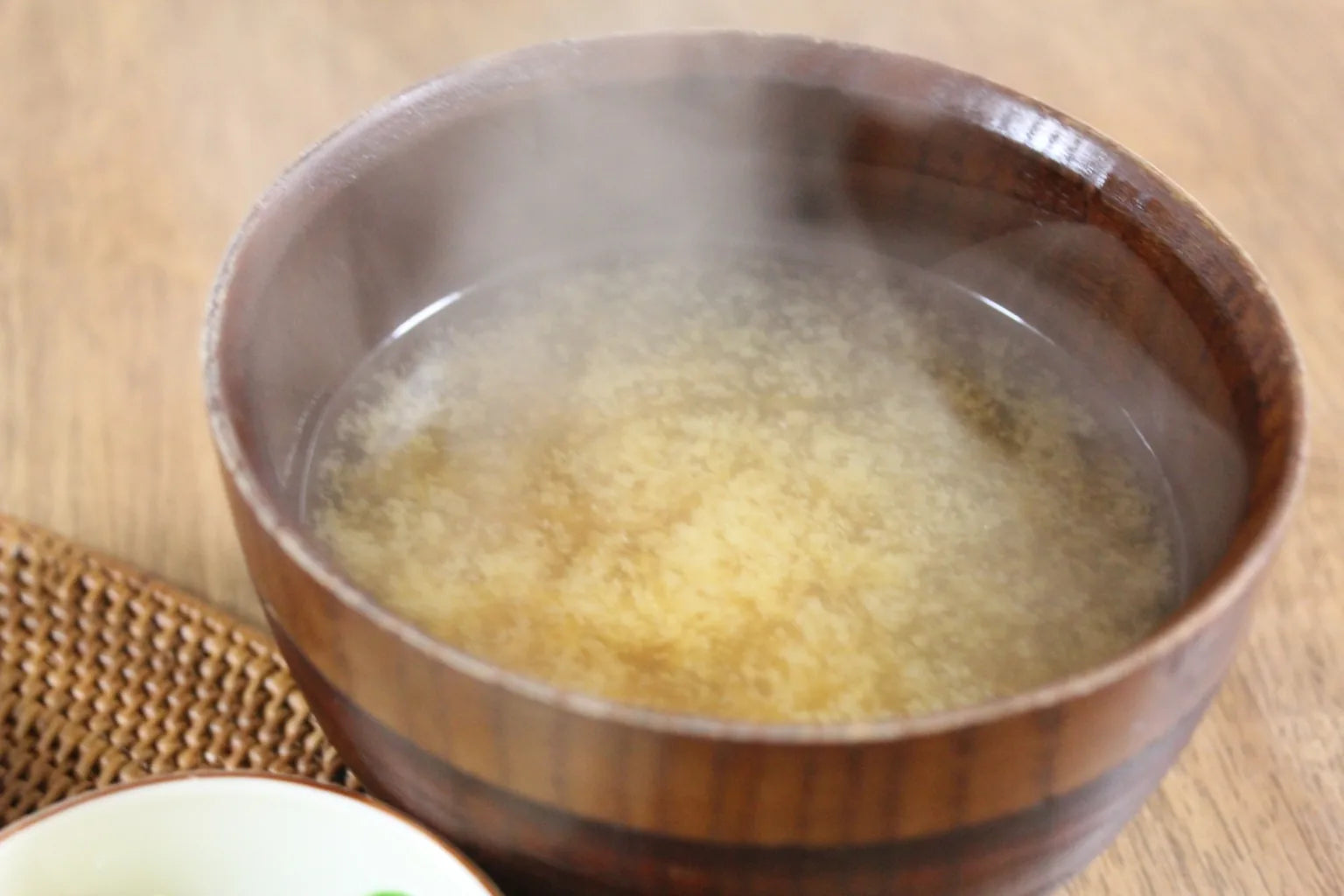
Why Dashi Tastes Different in Thailand: It's Actually the Water, Not the Kombu or Bonito Flakes

Why does dashi taste different even when using the same kombu and katsuobushi as in Japan?
Some of you who cook Japanese food in Thailand may have experienced a difference in taste compared to dashi made in Japan.
The kombu is from Japan.
The katsuobushi (bonito flakes) are from Japan.
The recipe is the same.
Yet, the miso soup and simmered dishes taste different.
The reason that is often overlooked is "water."
In fact, the taste of dashi can vary significantly depending on the water used.

Dashi is the foundation of Japanese cuisine.
Dashi is what supports the deliciousness of Japanese food.
Miso soup, simmered dishes, udon, soba, chawanmushi.
Many Japanese dishes are made with dashi as their base.
Common types of dashi include:
- Kombu dashi (kelp broth)
- Katsuobushi dashi (bonito flake broth)
- Niboshi dashi (dried sardine broth)
- Dried shiitake mushroom dashi
Although the ingredients themselves are simple, their combination creates the unique umami flavor characteristic of Japanese cuisine.

What are the umami components of dashi?
Kombu contains glutamic acid,
Katsuobushi contains inosinic acid,
And dried shiitake mushrooms contain guanylic acid.
These umami components, when combined, create a deeper flavor.
One reason why Japanese cuisine is globally acclaimed is this "umami culture."

Why is soft water said to be suitable for Japanese food?
Japan is one of the few countries in the world with soft water.
Soft water refers to water with relatively low mineral content, such as calcium and magnesium.
Japanese cuisine has developed over a long history within this soft water environment.
Therefore, dishes such as:
- Dashi
- Miso soup
- Simmered dishes
- Chawanmushi
- Japanese tea
are said to be compatible with soft water.
Especially in dishes that rely on delicate flavors like dashi, the difference in water can affect the taste.

Differences between Thai and Japanese water
In Thailand, water quality varies by region.
Even with a water purifier, the following may differ from Japan:
- Mineral balance
- Hardness
- Taste
Therefore, even when using the same kombu and katsuobushi, the taste of dashi may differ from that made in Japan.

Why Onsensui 99 is recommended for making dashi
ONSENSUI99 is natural alkaline hot spring water sourced from approximately 750m underground in Tarumizu City, Kagoshima Prefecture.
Its characteristics include:
- pH 9.5-9.9
- Hardness 1.7 mg/L
- Ultra-soft water
A hardness of 1.7 mg/L is considered ultra-soft water, a very low value even in Japan.
For this reason, it is chosen by those who want to bring out the natural flavor of Japanese ingredients.

Not just for dashi. Also for miso soup and takikomi gohan.
Dashi forms the basis of various Japanese dishes.
For example:
Miso Soup
Enjoy the flavors of dashi and miso.
Takikomi Gohan (Seasoned Rice)
The umami of dashi permeates the rice.
Nimono (Simmered Dishes)
Enhances the natural taste of the ingredients.
Chawanmushi (Savory Egg Custard)
Enjoy the smooth texture.
Because it supports Japanese cuisine as a whole, it's worth paying attention to the water.

Small adjustments you can try in your daily cooking
When cooking Japanese food,
before changing the kombu or katsuobushi,
first reconsider the water.
Even this alone might lead to new discoveries.
It is said that dashi, being a simple dish, makes it easier to perceive the difference in water.

Summary
When cooking Japanese food in Thailand,
you might feel that "the taste is somehow different from what I had in Japan."
The cause might not be the kombu or katsuobushi, but the water.
Japanese cuisine has developed in a culture of soft water.
Dashi, miso soup, simmered dishes, takikomi gohan.
Since these are everyday Japanese dishes, why not pay attention to the water you use?
Frequently Asked Questions (FAQ)
Which is better for dashi, soft water or hard water?
Generally, soft water is said to be more suitable for Japanese food and dashi.
Does the taste of dashi change with the water?
The impression of flavor and mouthfeel can change depending on the water quality.
What is the hardness of Onsensui 99?
The hardness of Onsensui 99 is 1.7 mg/L.
Can Onsensui 99 be used for things other than dashi?
It can be used for a wide range of Japanese dishes, including miso soup, rice, Japanese tea, and simmered dishes.
Related Articles
・Why Japanese food doesn't taste good in Thailand | It was actually the water, not the ingredients
・Why Japanese tea tastes different in Thailand | It was actually the water, not the tea leaves
・Why Japanese rice doesn't cook well in Thailand | Have you reconsidered the water, not the rice?
・It's not just rice. The reason why miso soup made with Onsensui 99 tastes better