Why Coffee Tastes Different in Thailand: It's Not Just the Beans, Water Plays a Role Too

Since you started living in Thailand,
Have you ever felt that "even with the same coffee beans, the taste is slightly different from what I drank in Japan"?
The coffee beans are the same.
The dripper is also the same.
The brewing method hasn't changed.
And yet,
・Strong bitterness
・Weak aroma
・Heavy aftertaste
・Doesn't taste like what I drank in Japan
Some of you may have had such experiences.
Of course, the taste of coffee changes depending on the type of beans, roast level, and brewing method.
However, what many people overlook is "water".

Coffee is about 99% water
Approximately 98-99% of a cup of coffee is made up of water.
This means that no matter how good the coffee beans are, the taste will change if the water changes.
That's why baristas and specialty coffee shops around the world emphasize water quality management.
If coffee beans are the star, water can be said to be the stage that brings out their charm.

Water characteristics differ between Japan and Thailand
Japan is a country with a rare soft water culture globally.
On the other hand, water with higher hardness than Japan is common overseas.
While there are many bottled water brands in Thailand, their characteristics may differ from the ultra-soft water that Japanese people are accustomed to.
Minerals such as calcium and magnesium contained in water are said to affect coffee extraction.

How does coffee taste change with soft and hard water?
| Comparison Item | Soft Water | Hard Water |
|---|---|---|
| Aroma | Easily enhanced | May be slightly suppressed |
| Sweetness | Easily perceived | May result in strong bitterness |
| Mouthfeel | Mellow | Rich and full-bodied |
| Aftertaste | Clean | May feel heavy |
| Compatibility with Japanese palate | ◎ | ○ |
It's not that one is inherently superior to the other.
However, the coffee taste that Japanese people are accustomed to often assumes extraction with soft water.

I myself felt the difference in Thailand
When I first started living in Thailand, even though I was using my favorite coffee beans that I brought from Japan,
I sometimes felt, "For some reason, it doesn't taste like what I drank in Japan."
Changing the beans or the grind didn't help, and the last thing I reconsidered was the water.
Then the impression of the aroma and aftertaste changed, and I realized anew how important water is for coffee.
It's not just coffee where I feel a difference in taste in Thailand
Actually, the difference due to water is not limited to coffee.
Among Japanese people living in Thailand, some feel that
・Japanese rice doesn't cook as well
・The dashi (soup stock) flavor isn't quite right
・Japanese tea has a weak aroma
Related Articles
→ Why Japanese rice doesn't cook well in Thailand | It's not actually the rice, but the "water" that's different
→ Why the taste of dashi changes in Thailand | It's not kombu or katsuobushi, but the "water" that was different
→ Why Japanese tea doesn't taste good in Thailand | It's not the tea leaves, but the "water" that's different

What is the recommended water hardness for coffee?
In the coffee industry, it is generally said that relatively soft water tends to bring out the aroma and sweetness better than extremely hard water.
Especially,
・Drip coffee
・Hand drip
・Specialty coffee
・Black coffee
For those who enjoy these, it is worth paying attention to the hardness of the water.

Why ONSENSUI99 pairs well with coffee
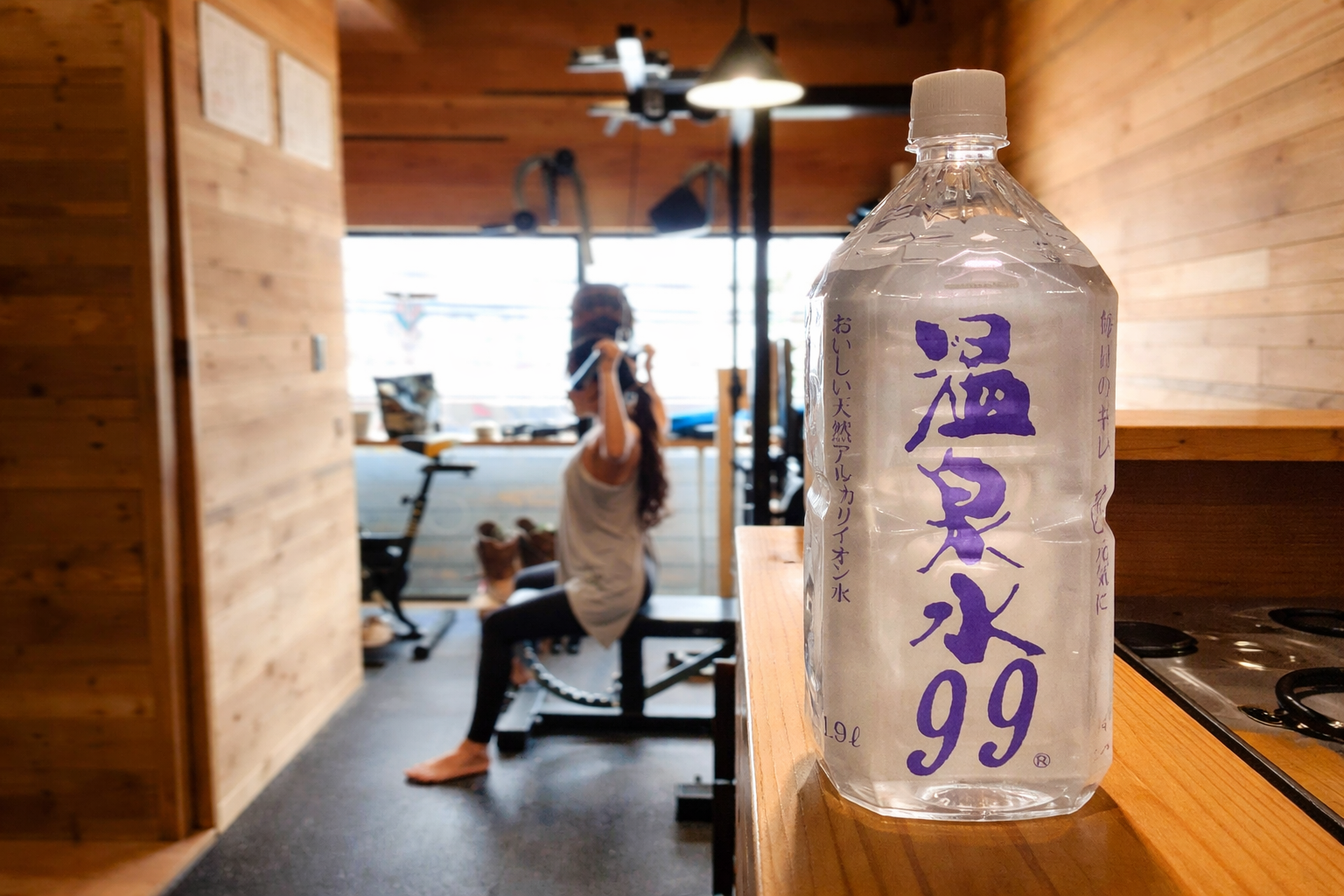
ONSENSUI99 is natural alkaline hot spring water sourced from 750m underground in Tarumizu City, Kagoshima Prefecture.
Its characteristics are:
・pH 9.5-9.9
・Hardness 1.7mg/L
・Ultra-soft water
This ultra-soft water with a hardness of 1.7mg/L is chosen by those who want to enjoy coffee in an environment similar to the taste they are accustomed to in Japan.
Frequently Asked Questions
Is it okay to brew coffee with Thai water?
It's fine. However, since the hardness and mineral content vary depending on the water, there may be differences in taste.
Which is better for coffee, soft water or hard water?
It depends on personal preference, but soft water tends to be preferred if you emphasize the aroma and sweetness that Japanese people are accustomed to.
Which is more important for coffee, beans or water?
Both are important, but since the majority of a cup of coffee is composed of water, the influence of water is said to be significant.
Is it okay to brew coffee with alkaline hot spring water?
Generally, there's no problem. Since individual perceptions of taste vary, it's recommended to compare them yourself.
Related Articles
Why is overseas water difficult to drink? Explaining the difference from Japanese soft water
Does coffee taste change with water? "The correct way to choose water" for delicious brewing
Summary
If you feel that the taste of coffee is different in Thailand, the cause may not only be the coffee beans, but also the water.
About 99% of coffee is water.
By paying attention not only to bean selection but also to water selection, you might be able to get closer to your preferred cup.
To enjoy the coffee taste you're familiar with in Japan, even in Thailand, why not consider the perspective of water?