What is the difference between soft and hard water? An explanation of differences in hardness, taste, and cooking, and the ultra-soft water "Onsen Water 99"

"What's the difference between soft water and hard water?"
When choosing mineral water, you may come across the terms "soft water" and "hard water."
To understand the difference, it is important to know **"hardness,"** which is based on the amount of calcium and magnesium in the water.
Differences in hardness affect not only the taste and mouthfeel of the water but also how it feels when used in tea, coffee, and cooking.
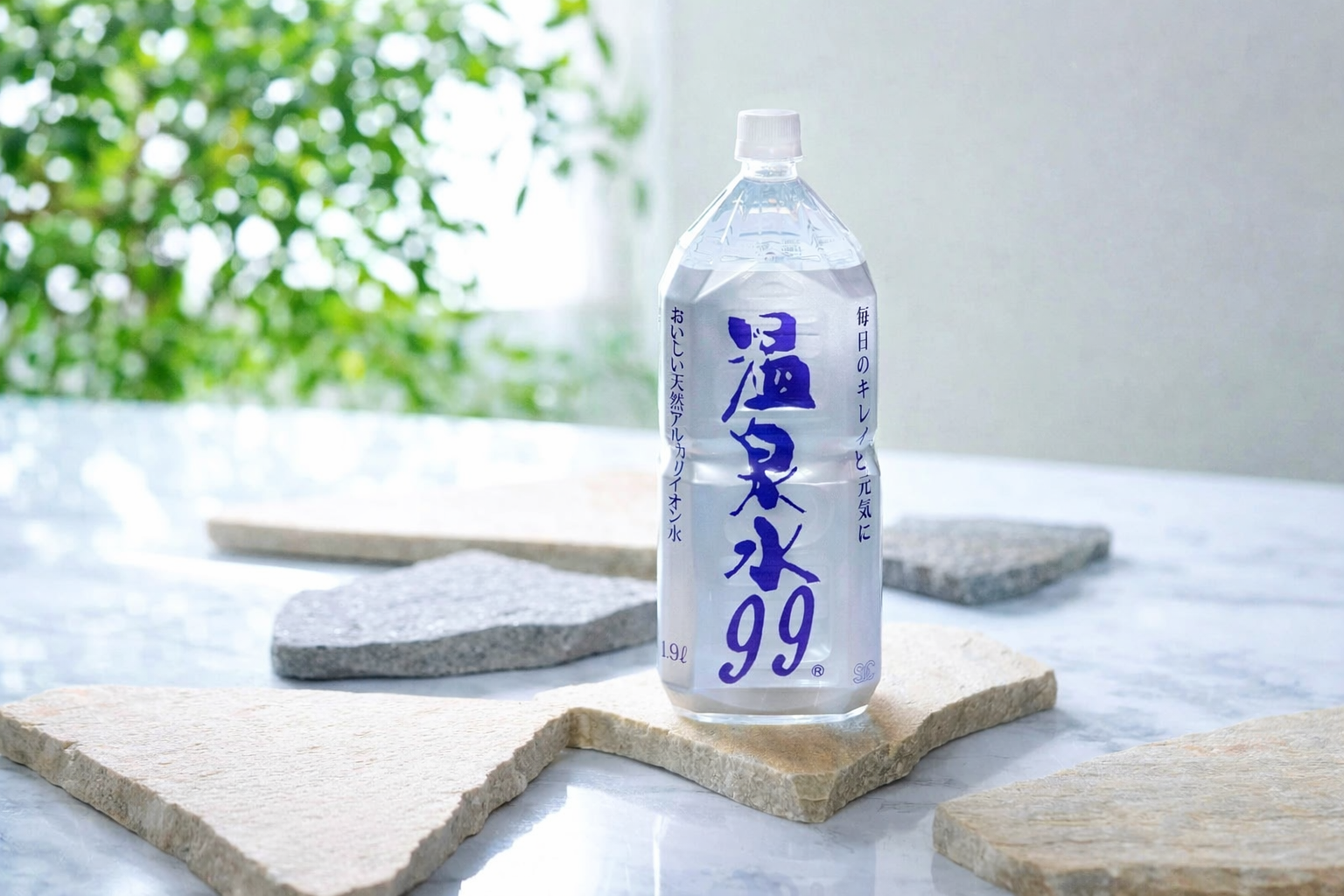
In this article, we will clearly explain the differences between soft water and hard water, how to understand hardness, its relationship with taste and cooking, and the characteristics of **ONSENSUI99, an ultra-soft water with a hardness of 1.7 mg/L**.
The difference between soft water and hard water is "hardness"
Water contains minerals such as calcium and magnesium.
Among these, **the value expressed as calcium carbonate (CaCO₃) equivalent of the amount of mainly calcium and magnesium is called "hardness."
Generally,
Water with low hardness → Soft water
Water with high hardness → Hard water
is called.
In other words, the terms "soft water" and "hard water" do not refer to the physical hardness of the water itself.
They are guidelines for knowing the amount of calcium, magnesium, and other minerals in the water.
From what mg/L is water classified as soft or hard?
There are several ways to classify soft water and hard water.
The general classification introduced in WHO (World Health Organization) materials is as follows.
| Hardness | Classification |
|---|---|
| Less than 60 mg/L | Soft water |
| 60–120 mg/L | Moderately hard water |
| 120–180 mg/L | Hard water |
| Over 180 mg/L | Very hard water |
*Hardness is expressed as calcium carbonate (CaCO₃) equivalent.
However, there is no single universally accepted classification for soft water and hard water, and different classification methods may be used.
Therefore, when comparing water, not only the terms "soft water" and "hard water" but also the actual hardness in mg/L will make it easier to understand the characteristics of the water.
Characteristics of soft water
Soft water has a relatively low content of calcium and magnesium and low hardness.
Generally, it is characterized by a light, soft mouthfeel.
Although there are regional differences, most tap water in Japan is soft water, and it is widely used not only for drinking but also for
- Japanese tea
- Matcha
- Coffee
- Cooking rice
- Making dashi
- Simmered dishes
and other beverages and dishes.
▶ Related article:What is Japanese soft water?|The reason for the soft water culture and why ONSENSUI99 is easy to drink
Characteristics of hard water
Hard water contains relatively high amounts of calcium and magnesium and has high hardness.
Depending on the mineral content and balance, it may have a firm mouthfeel that differs from soft water.
Water hardness varies greatly by region around the world.
When drinking water abroad,
one of the reasons you may feel that "it tastes different from the water I usually drink"
may be due to differences in hardness and mineral composition.
Soft water and hard water—how do they differ in taste?
At first glance, all water may look the same, but the taste and mouthfeel differ depending on the type and amount of minerals contained.
Generally, low-hardness soft water tends to have a light and soft mouthfeel.
On the other hand, as hardness increases, the influence of calcium, magnesium, and other minerals may result in a mouthfeel that differs from soft water.
However, the taste of water is not determined by hardness alone.
Various factors, including the type and balance of minerals, pH, and water source, are involved.
Therefore,
"lower hardness is always better"
or
"higher hardness is always better"
is not necessarily the case.
When choosing water, it is important to consider not only the numbers but also whether it suits your preferences and intended use.
Do soft water and hard water make a difference in cooking?
Water is not only drunk as is but also used in daily cooking.
In Japan in particular, water is used in many situations, such as cooking rice, making dashi, and brewing tea.
Tea and matcha
The characteristics of the water itself affect the final result of tea and matcha.
Even with the same tea leaves or matcha, you may notice differences in aroma and taste when you try different waters.
▶ Related article:Does water change the taste of matcha?|Differences in water that affect deliciousness and how to choose
Coffee
Coffee is also mostly made of water.
Not only the beans and roasting method, but also the type and amount of minerals in the water affect how it is extracted and its taste, making water one of the important factors in enjoying coffee.
▶ Related article:How does coffee change with soft water and hard water?|How to choose delicious water
Cooking rice
Rice requires a lot of water from washing to cooking.
Even with your usual rice, you can enjoy differences in taste and texture by trying different waters.
▶ Related article:How does cooking rice with ONSENSUI99 change the result?|Why ultra-soft water brings out the deliciousness of rice and points for choosing water
Water is something you drink, but it is also something that supports the taste of ingredients and beverages.
Should you choose soft water or hard water?
Neither soft water nor hard water is superior.
What is important when choosing water is matching it to your purpose and preferences.
For example,
- Mouthfeel when drinking it as is
- Compatibility with tea and coffee
- Ease of use for cooking rice and cooking
- Mineral content
- Water source
- pH
- A taste you want to keep drinking every day
Comparing these factors will make it easier to find the right water for you.
Instead of judging by the classification of "soft water" or "hard water" alone, checking the actual hardness listed on product labels is another way to choose water.
ONSENSUI99 is ultra-soft water with a hardness of 1.7 mg/L
The hardness of "ONSENSUI99," which is collected in Tarumizu City, Kagoshima Prefecture, is only 1.7 mg/L.
Because it has a very low hardness even among general soft water, ONSENSUI99 is introduced with this characteristic as **"Ultra Soft Water."**
Looking at the hardness number alone,
1.7 mg/L
may be difficult to understand how much that value is.
In the classification introduced earlier, water with less than 60 mg/L is considered soft water.
ONSENSUI99's hardness of 1.7 mg/L is a very low value even among soft water.
▶ Related article:Why is ONSENSUI99 easy to drink?|The reason ultra-soft water with a hardness of 1.7 is chosen
ONSENSUI99 is not just "ultra-soft water"
The characteristics of ONSENSUI99 are not limited to its low hardness.
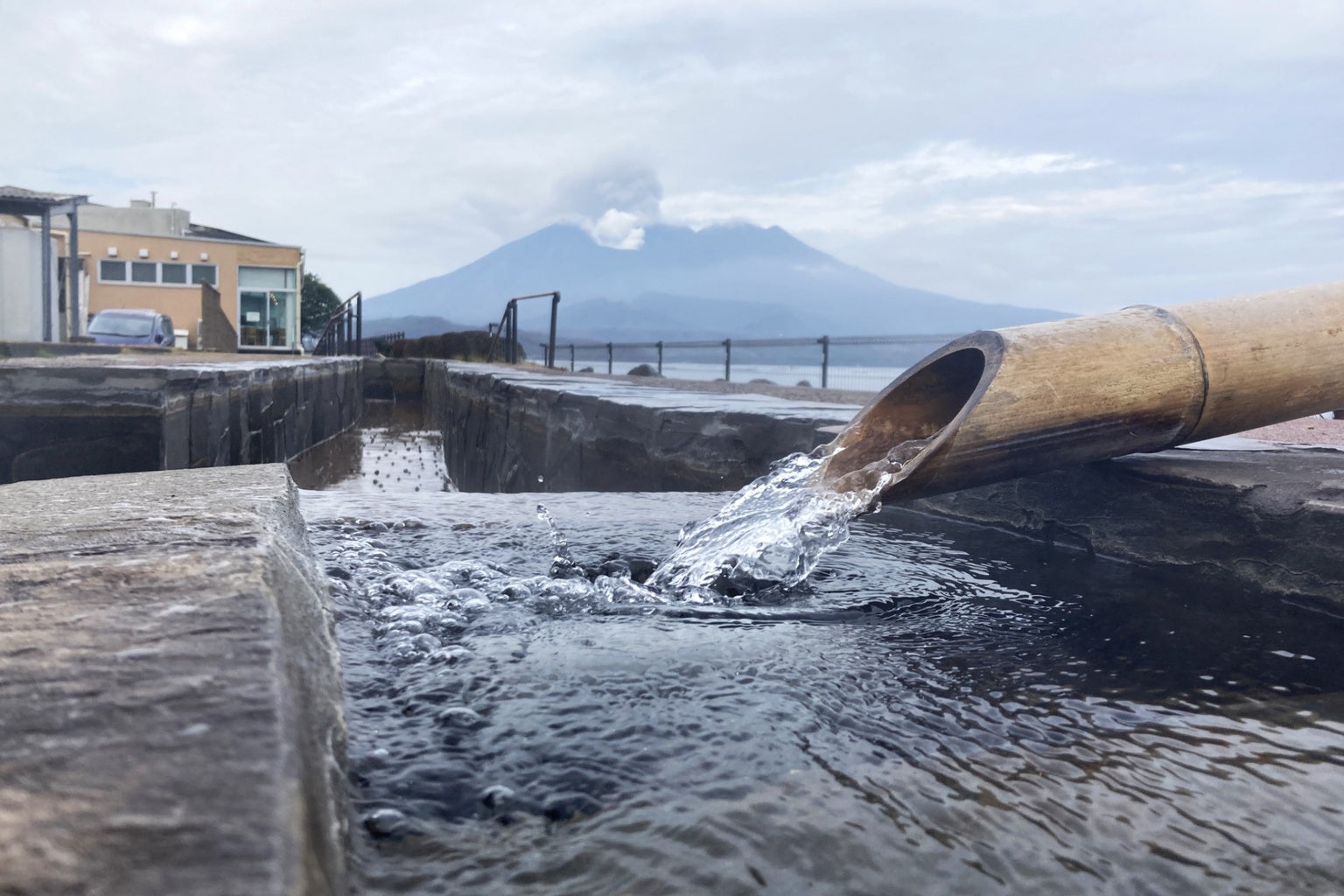
It is natural hot spring water collected from deep underground in Tarumizu City, Kagoshima Prefecture, and shows a natural pH of 9.5–9.9.
In other words, ONSENSUI99 is a water that has two characteristics:
ultra-soft water with a hardness of 1.7 mg/L
and
a natural pH of 9.5–9.9
.
What you should know here is that hardness and pH are different indicators.
Hardness is an indicator mainly related to the amount of calcium and magnesium.
On the other hand, pH is an indicator that shows whether water is acidic, neutral, or alkaline.
Therefore, when learning about the characteristics of water, not only "whether it is alkaline" but also checking the hardness and water source togetheris important.
▶ Related article:What is ONSENSUI99?|The appeal of natural hot spring water nurtured in Tarumizu City, Kagoshima Prefecture
Because it is water you drink every day, try choosing it by looking at the "numbers"
At first glance, all mineral water bottles look like the same "water."
However, when you compare the water source, hardness, mineral balance, pH, and other factors, each has its differences.
In particular, the label "soft water" alone does not tell you how hard the water is.
When choosing water,
not only "because it is soft water," but also "what is the hardness in mg/L?"
Checking this will make the differences in water easier to understand.
The hardness of ONSENSUI99 is 1.7 mg/L.
Not only drinking it as is, but also trying different waters in your daily life for tea, matcha, coffee, and cooking rice is another way to enjoy it.
Summary|Learn the differences between soft water and hard water, and choose the water that suits you
The major difference between soft water and hard water is "hardness," which comes from calcium, magnesium, and other minerals.
Generally,
low hardness → soft water
high hardness → hard water
can be considered.
However, it is important to choose according to the taste, use, and preferences, rather than "which is better."
And even among waters called the same "soft water," there are big differences in actual hardness.
ONSENSUI99 is ultra-soft water with a hardness of 1.7 mg/L collected in Tarumizu City, Kagoshima Prefecture.
Furthermore, it also has the characteristic of a natural pH of 9.5–9.9.
Because it is water you drink every day, why not look not only at "whether it is soft water or hard water" but also at the hardness, water source, pH, and other factors to find the water that suits you?
Frequently Asked Questions
Q. What is the difference between soft water and hard water?
The main difference is "hardness." Hardness is expressed based on the amount of calcium and magnesium contained in the water. Generally, water with low hardness is called soft water, and water with high hardness is called hard water.
Q. From what mg/L is soft water?
It varies depending on the classification method, but in the general classification introduced in WHO materials, water with a hardness of less than 60 mg/L is considered soft water.
Q. What is ultra-soft water?
There is no single universally accepted official classification standard for "ultra-soft water," but it is an expression generally used to refer to water with very low hardness. The hardness of ONSENSUI99 is 1.7 mg/L.
Q. Is ONSENSUI99 soft water?
Yes. ONSENSUI99 is very low-hardness soft water with a hardness of 1.7 mg/L, and it is introduced as "Ultra Soft Water."
Q. Are hardness and pH the same thing?
No, they are different indicators. Hardness is mainly related to the amount of calcium and magnesium, while pH indicates whether water is acidic, neutral, or alkaline. ONSENSUI99 has a hardness of 1.7 mg/L and a natural pH of 9.5–9.9.