Alkaline Ionized Water vs. Natural Alkaline Water: A Clear Explanation of Production Methods and Characteristics

There are various types of alkaline water
When many people hear "alkaline water," they might immediately think of "alkaline ionized water." However, there are multiple types of water that exhibit alkalinity, and their production methods and characteristics differ.
The most common types are alkaline ionized water, produced through electrolysis, and high-pH natural water, nurtured within natural geological formations.
Both share the commonality of being alkaline with a pH exceeding 7, but the significant difference lies in "how they became alkaline."
Understanding this difference can help you choose the right water for your needs.
What is general alkaline ionized water?
Generally, alkaline ionized water refers to potable water that has been made alkaline through electrolysis of water suitable for drinking.
In Japan, it is often produced by household water purifiers, and many people may have heard of the term "alkaline ion water purifier."
Electrolysis processes water with electricity, separating it into alkaline drinking water and acidic water.
Some water purifiers allow for pH adjustment of the produced alkaline ionized water.
Therefore, a key characteristic of general alkaline ionized water is that it is "water that has become alkaline through electrolysis."
What is natural alkaline water?
On the other hand, there is also naturally occurring alkaline water.
Such natural water is formed as rain and snow seep into the ground and pass through rocks and geological layers over a long period, influenced by the geology and minerals of each region.
As a result, natural water with a naturally high pH can emerge.
This type of natural water is not artificially adjusted to be alkaline through electrolysis or similar methods, but rather water nurtured in a natural environment.
The mineral balance and taste vary depending on the source, each having its own unique characteristics.
Differences between alkaline ionized water and natural alkaline water
Both share the commonality of being alkaline, but their production methods and origins differ.
| Comparison Item | General Alkaline Ionized Water | Natural Alkaline Water |
|---|---|---|
| Mechanism for becoming alkaline | Electrolysis | Natural geological environment |
| Artificial processing | Performed (electrolysis) | Not performed |
| Water origin | Generated through processing | Naturally formed groundwater |
| Water quality | Varies depending on source water and water purifier | Varies depending on the collection site |
| Taste | Depends on the source water | Unique characteristics due to geology and minerals |
Thus, when choosing water, it's not just about alkalinity, but also considering "what kind of environment the water was nurtured in" is an important factor.

What is Onsensui 99?
Onsensui 99 is a natural mineral water with high pH and ultra-softness, sourced from Tarumizu City, Kagoshima Prefecture.
It is naturally filtered deep underground over a long period, nurtured by the geological environment unique to its source.
While often compared to general alkaline ionized water, Onsensui 99 is not water that has been made alkaline through electrolysis.
It is natural water formed in a natural environment, and one of its characteristics is its high pH.
Another feature is its ultra-softness, with a hardness of approximately 1.7 mg/L.
This gives it a smooth and mild taste.
High pH alone does not determine the value of water
Sometimes, "high pH water = good water" is thought.
However, when choosing water, it's important to consider various factors comprehensively, not just the pH.
For example,
- How was the water made?
- Where is the water sourced from?
- What is the hardness level?
- What does it taste like?
- Is it easy to drink daily?
These points are also crucial when choosing water.
Onsensui 99 is chosen by many not only for its high pH, but also for its natural origin and the ease of drinking unique to ultra-soft water.
Easy to drink thanks to its ultra-softness
"Hardness" is a factor that influences the deliciousness of water.
Hardness is an indicator of the amount of calcium and magnesium contained in water.
Generally, water with a hardness of less than 60 mg/L is considered soft water.
The hardness of Onsensui 99 is approximately 1.7 mg/L.
It is extremely low compared to general soft water, and its ultra-softness gives it a distinctive smooth taste.
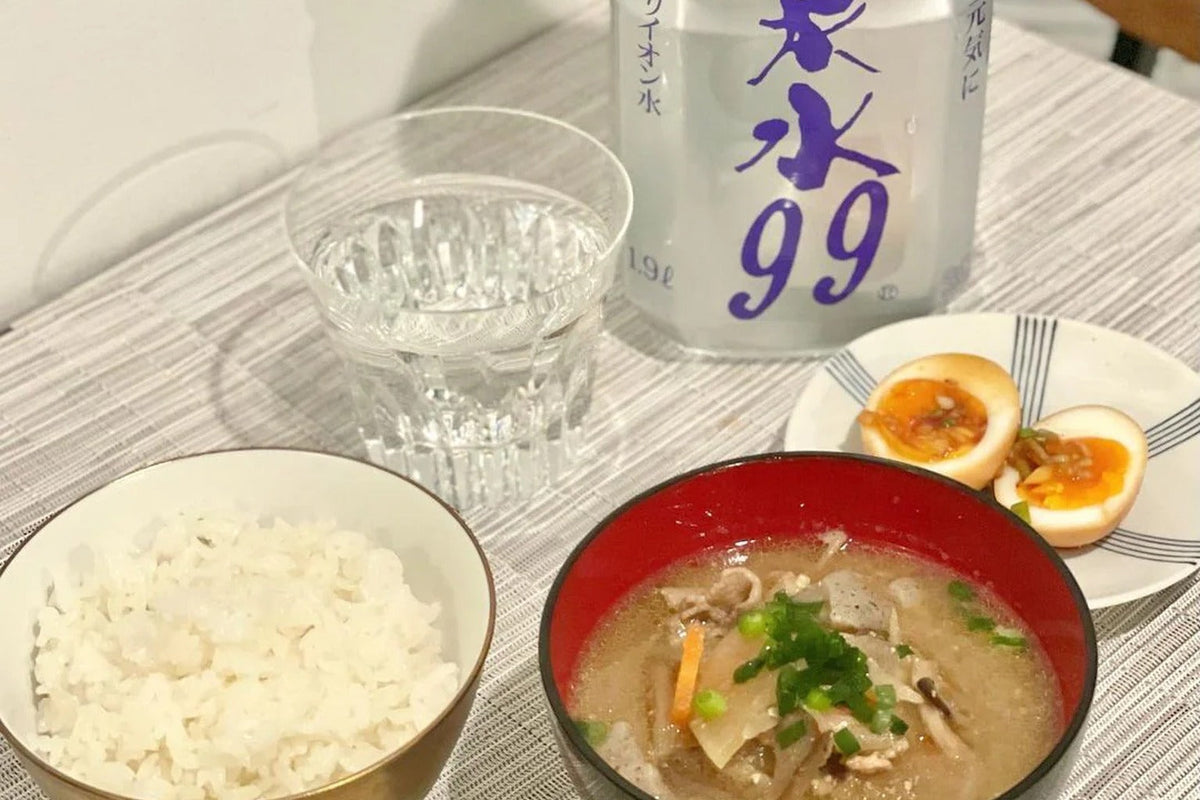
Many people find it easy to drink due to its mild taste, and it is also used for tea, coffee, cooking rice, and soups.
Comparison of Onsensui 99 and general alkaline ionized water
While both share the common characteristic of "alkalinity," clarifying their respective features makes the differences easier to understand.
Comparison ① Production method
| Item | General Alkaline Ionized Water | Onsensui 99 |
|---|---|---|
| Mechanism for becoming alkaline | Electrolysis | Natural geological environment |
| Artificial processing | Performed | Not performed |
| Origin | Generated through processing | Naturally formed as groundwater |
Comparison ② Water quality
| Item | General Alkaline Ionized Water | Onsensui 99 |
| pH | Varies depending on purifier settings, etc. | Approx. 9.5-9.9 |
| Hardness | Varies depending on source water | Approx. 1.7mg/L |
| Taste | Varies depending on source water | Smooth and gentle taste |
Comparison ③ Usage scenarios
| Usage | General Alkaline Ionized Water | Onsensui 99 |
| Daily hydration | ○ | ○ |
| Coffee/Tea | Depends on source water | ○ |
| Cooking rice/dishes | Depends on source water | ○ |
| Enjoying the individuality of the source region | ― | ○ |
What's important when choosing water
Alkalinity is one characteristic of water.
However, the value of water is not determined by that alone.
The individuality of each type of water is born from a combination of various factors such as its source, natural environment, mineral balance, hardness, and taste.
Onsensui 99 is a natural mineral water with high pH and ultra-softness, nurtured in the rich natural environment of Tarumizu City, Kagoshima Prefecture.
It is enjoyed not only as daily drinking water but also for a wide range of uses including tea, coffee, and cooking.

Frequently Asked Questions (FAQ)
Q1. What kind of water is alkaline ionized water?
Generally, it refers to drinking water that has been made alkaline by electrolyzing water. It is often produced by household water purifiers and is widely known in Japan.
Q2. What is natural alkaline water?
It is natural water that naturally has a high pH, acquired by passing through natural geological layers over a long period. It is formed in a natural environment without artificial electrolysis.
Q3. Is Onsensui 99 the same as general alkaline ionized water?
Both share the common characteristic of being alkaline, but their production methods differ.
General alkaline ionized water is produced through electrolysis. On the other hand, Onsensui 99 is a natural mineral water with high pH and ultra-softness, nurtured in a natural environment.
Q4. Is Onsensui 99 artificially adjusted to be alkaline?
No.
It is not adjusted to be alkaline through electrolysis or the addition of chemicals.
It is natural water nurtured by the natural geological environment.
Q5. What is high-pH water?
pH is an indicator of whether water is acidic, neutral, or alkaline.
Generally, water with a pH higher than 7 is considered alkaline.
Q6. Should I only look at pH when choosing water?
No.
When choosing water, it is recommended to consider not only pH but also hardness, taste, source, and intended use.
Q7. What is ultra-soft water?
Ultra-soft water refers to water with a very low content of calcium, magnesium, etc. (hardness).
Onsensui 99 is ultra-soft water with a hardness of approximately 1.7 mg/L, characterized by its smooth taste.
Q8. Can it be used for coffee and tea?
Yes.
Due to its gentle taste unique to ultra-soft water, it is also used for coffee, green tea, black tea, and more.
Q9. Can it be used for cooking?
Yes.
It is widely used for daily cooking, such as cooking rice, making dashi (broth), soups, and simmered dishes.
Q10. Can it be drunk as daily drinking water?
Onsensui 99 is natural water manufactured and sold for consumption.
Many people use it for daily hydration.
Q11. Are natural water and mineral water the same?
Natural water may be used as a general term for water originating from natural underground sources. In Japan, however, it is classified into "natural water," "natural mineral water," and "mineral water" based on production methods and other factors. When comparing products, it is advisable to check the classification label.
Q12. Who is Onsensui 99 recommended for?
It is recommended for those who are particular about their daily drinking water, those who prefer water with a smooth taste, and those looking for water that can be easily used for coffee, tea, and cooking.
Summary
"Alkaline ionized water" and "naturally occurring high-pH natural water" both share the characteristic of being alkaline, but their production methods and origins differ.
General alkaline ionized water is drinking water that has become alkaline through electrolysis.
On the other hand, Onsensui 99 is a natural mineral water with high pH and ultra-softness, nurtured over a long period in the natural environment of Tarumizu City, Kagoshima Prefecture.
When choosing water, looking beyond just pH and considering factors like source, hardness, taste, and usage will help you find the water that suits you best.
Please enjoy the mellow taste nurtured by nature, not only as daily drinking water but also by incorporating it into tea, coffee, and cooking.
Related articles
- What is Onsensui 99? Detailed explanation of high-pH, ultra-soft natural water
- What is alkaline ionized water? Differences between general alkaline ionized water and Onsensui 99
- What is ultra-soft water? Explanation of its characteristics and hardness
- What is high-pH natural water? Explanation of characteristics and how to choose
- About Tarumizu City, Kagoshima Prefecture and Onsensui 99